Puerto Rico travel guide
Puerto Rico Food Guide: What to Eat and Where to Experience It
Learn the Puerto Rican foods worth knowing, from mofongo and arroz con gandules to lechón, frituras, pasteles and regional food experiences.
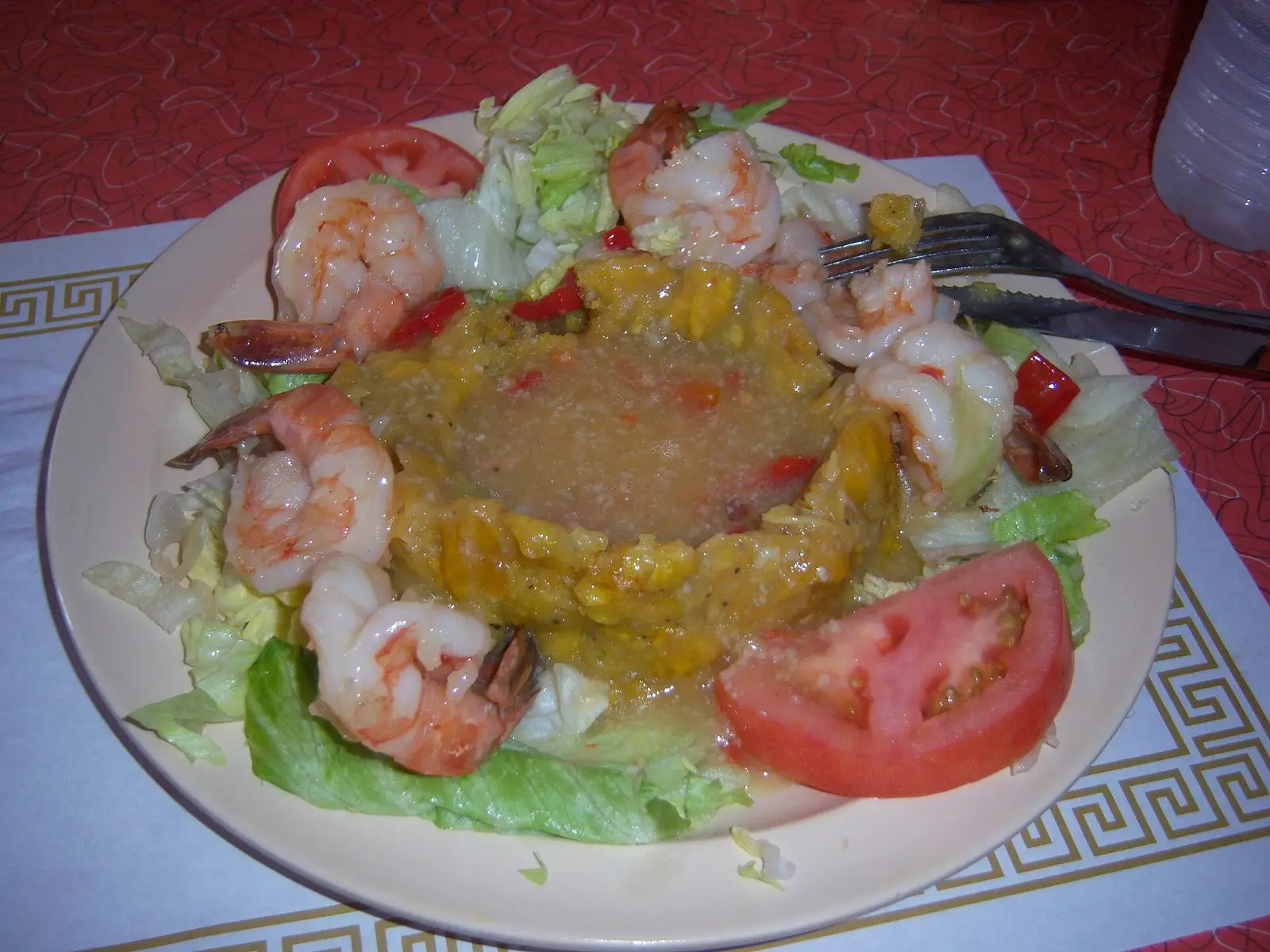
Puerto Rican food is easiest to understand through a few building blocks: plantains, rice, beans, root vegetables, pork, seafood, sofrito and frituras. The same ingredients can appear in very different forms, from a plate of arroz con gandules to a roadside alcapurria or a carefully plated modern San Juan dinner.
You do not need to turn a one-week trip into a restaurant checklist. Learn the dishes, then use them to make better choices as you move around the island.
Mofongo
Mofongo is one of the dishes travelers encounter most often.
The classic base uses fried green plantain that is mashed with garlic and usually pork cracklings or other seasoning. It can be served as a side or formed around fillings such as chicken, pork, seafood or vegetables.
The useful thing to know is that “mofongo” does not describe one fixed restaurant dish. Texture, garlic level, broth and filling can vary considerably.
Try it more than once if you like plantain-based food rather than deciding the category from a single version.
Arroz con gandules
Arroz con gandules combines rice with pigeon peas and a seasoned base that commonly includes sofrito and other aromatics.
It is one of Puerto Rico's signature rice dishes and appears throughout the year, with especially strong associations with celebrations and holiday meals.
You will often see it served with roasted pork or other meats.
For travelers, it is a useful reference point because it introduces flavors that recur across Puerto Rican cooking without requiring a specialist restaurant.
Lechón asado
Lechón is slow-roasted pork and one of the strongest reasons to make food part of a day trip.
The most famous destination is Guavate, in the mountains of Cayey, where the Ruta del Lechón is known for its concentration of lechoneras. The experience is not only the pork: side dishes, music and the social atmosphere are part of the appeal, especially on busy weekends.
A Guavate outing works best when it already fits your driving route. Do not sacrifice an entire day merely to collect one famous plate if your itinerary is otherwise concentrated in San Juan and the east.
Pernil
Pernil is seasoned roasted pork shoulder.
It can appear in home-style restaurants and celebratory meals and is a good alternative when you want Puerto Rican roast-pork flavor without building a trip around a lechonera.
The key distinction for a visitor is practical rather than technical: lechón is often associated with whole-pig roasting and destination food culture, while pernil is an everyday dish you may encounter in many more contexts.
Tostones and amarillos
Plantains appear everywhere, but preparation changes the result completely.
Tostones are made from green plantain that is fried, flattened and fried again, producing a savory side with crisp edges.
Amarillos or maduros use ripe plantain and are sweeter and softer.
If you think you do not like plantains, try both before deciding. They occupy very different parts of a meal.
Alcapurrias and other frituras
Frituras are among the easiest Puerto Rican foods to try casually.
Alcapurrias are fried, filled fritters commonly made with a root-vegetable or green-banana/plantain-style masa and a savory filling. You may also encounter bacalaitos, empanadillas or pastelillos and other fried snacks depending on the venue.
The exact names, fillings and doughs vary. That variety is part of the category.
These foods make particular sense at kiosks, beach areas, markets and casual neighborhood stops where you can sample more than one item.
Pasteles
Puerto Rican pasteles are not a dessert.
They use a seasoned masa, traditionally involving green banana and/or root vegetables, wrapped around a savory filling and cooked in a leaf wrapper. They are strongly associated with holiday traditions, although availability is not limited to one season.
If you see them on a menu and expect a pastry, the texture and flavor will be a surprise. Think of them as a wrapped savory dish with its own Puerto Rican preparation tradition.
Seafood
Puerto Rico is an island, but “Puerto Rican food” should not be reduced to pork and plantains.
Coastal menus can include fresh fish, octopus, conch and other seafood prepared in local styles. Availability changes by region and restaurant.
Seafood makes particular sense when you are already in places such as the east coast, Culebra, Vieques or the southwest rather than seeking one generic “best seafood restaurant in Puerto Rico.”
Sofrito: the flavor base you keep tasting
Sofrito is a seasoned aromatic base used across many Puerto Rican dishes.
Recipes vary, but ingredients can include peppers, onion, garlic, cilantro and recao/culantro. It helps explain why rice, stews and meats can share a recognizable foundation even when the final dishes are completely different.
You do not need to order sofrito by itself. Notice how it connects the food you are already eating.
What about desserts?
Look for desserts and sweets such as tembleque, a coconut pudding commonly finished with cinnamon, and other pastries or sweets influenced by the island's Spanish, African, Caribbean and broader culinary history.
Dessert availability is often more restaurant- and season-dependent than the core savory dishes, so treat this as an invitation to ask what the place actually does well.
Where should you eat Puerto Rican food?
There is no single neighborhood that owns Puerto Rican cooking.
A good one-week strategy is:
San Juan
Use the city for range: traditional cooking, modern Puerto Rican restaurants, food tours and casual frituras.
Guavate
Go for the lechonera experience when your route and schedule justify the drive.
East coast and islands
Let seafood and casual coastal food become part of Fajardo, Culebra or Vieques rather than a separate mission.
West and south
Use regional stops to broaden the trip beyond San Juan. A road trip is more interesting when lunch belongs to the place you are visiting.
Is a San Juan food tour worth it?
A food tour can be a good early-trip purchase because it combines several tastings with context about ingredients, neighborhoods and history.
It is most valuable when you want orientation, not when you simply want the largest amount of food for the price.
Take one near the start of the trip, then use what you learn to order independently later. That makes the tour an assist for the rest of your meals rather than a one-off attraction.
See San Juan food tours, things to do in San Juan and best tours in Puerto Rico for the wider activity decision.
How to avoid eating the same thing all week
Puerto Rico makes it easy to repeat mofongo, pork and fried food because those dishes are visible to visitors.
Vary the trip deliberately:
- one traditional rice-and-beans meal;
- one mofongo;
- one seafood meal;
- one fritura stop;
- one roast-pork experience;
- one contemporary Puerto Rican restaurant;
- fruit, coffee and lighter meals between the heavy ones.
That gives you a much better sense of the cuisine than ordering the same famous dish every night.
Food and the one-week itinerary
Food works best when it follows the route.
Do not cross the island for a single restaurant unless the restaurant is genuinely one of your trip priorities. Build Guavate into a central-mountain or southbound day. Let Vieques food happen while you are on Vieques. Use San Juan for depth and variety.
For the wider plan, start with the Puerto Rico travel guide, where to stay in Puerto Rico and the one-week itinerary.
Keep planning
Build the rest of your Puerto Rico trip
Use the core planning guides to connect where you stay, what you do and the day trips that are worth the travel time.