Puerto Rico travel guide
Cueva del Indio, Puerto Rico: Visit Planning Guide
Plan a Cueva del Indio visit in Arecibo with realistic guidance on coastal terrain, Taíno petroglyphs, safety, access and how to combine it with Puerto Rico's north coast.
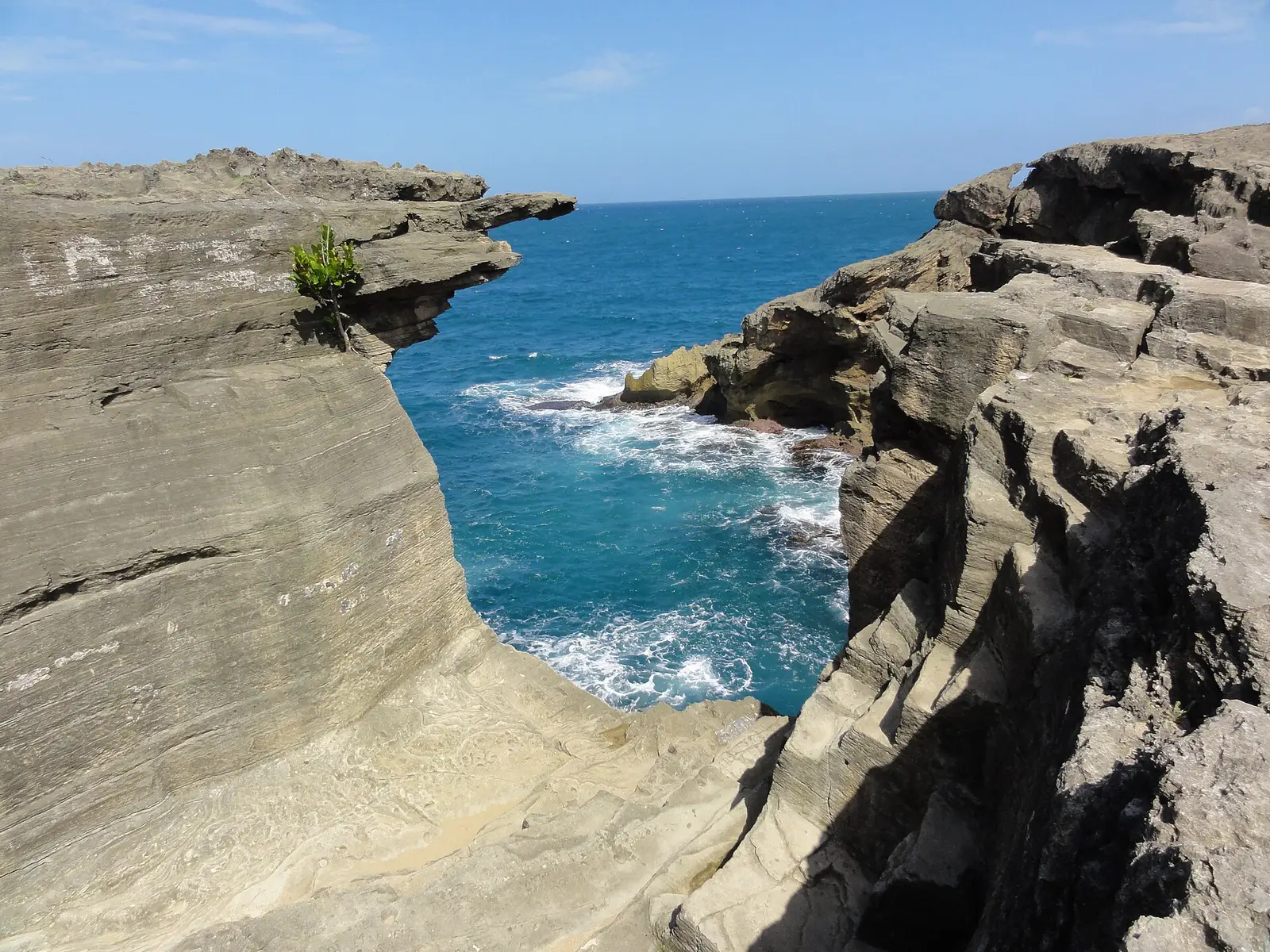
Cueva del Indio in Arecibo is a rugged north-coast site where limestone, Atlantic waves and Taíno petroglyphs come together.
It is not the same attraction as Cueva del Indio in Las Piedras.
The Arecibo site is the coastal cave and cliff area most travelers mean when they search for Cueva del Indio Puerto Rico.
Current Discover Puerto Rico guidance describes it as a dramatic coastal formation with sea cliffs, arches and one of the strongest concentrations of Taíno petroglyphs on Puerto Rico's north coast.
The setting is impressive, but it is also more physically demanding than a normal viewpoint.
Where is Cueva del Indio?
The site is on the Arecibo coast in northern Puerto Rico.
It fits naturally with:
- Arecibo;
- north-coast road trips;
- cave/karst itineraries;
- a drive between San Juan and the northwest.
It is not a reason to rush across the island if your trip is otherwise centered on the east.
What will you see?
The landscape includes:
- limestone formations;
- sea cliffs;
- natural arches;
- cave spaces;
- Atlantic views;
- Taíno petroglyphs.
The combination of cultural significance and exposed coastline is what makes the site special.
Treat it as an archaeological/cultural landscape, not simply a backdrop for photos.
The Taíno petroglyphs
Discover Puerto Rico identifies the Arecibo Cueva del Indio as containing a particularly important concentration of Taíno petroglyphs along the north coast.
Do not touch, trace, chalk or climb over carvings.
Petroglyphs are not interactive props.
The best visitor behavior is to:
- observe;
- photograph without damaging;
- stay on practical access routes;
- leave the site unchanged.
How difficult is the visit?
Current Puerto Rico tourism guidance describes access as somewhat difficult, with rocky terrain and elevation changes.
That is important.
Expect a visit that can involve:
- uneven limestone;
- exposed rock;
- rough footing;
- coastal wind;
- sections where balance matters.
This is not the place for smooth-soled sandals.
Wear real shoes with grip.
Cliff safety
The north-coast setting is exposed.
Stay back from cliff edges.
Do not:
- climb onto a narrow arch for a photo;
- stand where waves can reach unexpectedly;
- follow another visitor onto terrain you do not feel comfortable crossing;
- treat an unguarded edge as proof it is safe.
Wind, rain and wet limestone can make exposed terrain harder than expected.
Ocean conditions matter
Cueva del Indio is primarily a land-based coastal visit, but Atlantic conditions still matter.
Strong swell can make the coastline more dangerous even on a sunny day.
Check the National Weather Service surf/coastal forecast when conditions are rough.
If the weather or surf looks poor, choose another north-coast stop.
Can you enter the cave?
Access patterns around natural sites can change due to safety, land management and visitor pressure.
Do not assume every cave opening or descent visible in an old video is an appropriate visitor route today.
Use current on-site guidance and stay within the route you can safely manage.
The visit remains worthwhile for the coastal formations and cultural landscape even if you do not descend into every space.
Parking and access
Parking/access arrangements around Cueva del Indio have changed over time and can be confusing in older travel reports.
Because this is exactly the kind of operational detail that can change, verify the current arrangement when you travel rather than relying on an old quoted fee.
Build enough time into the day that a parking or access change does not force you to rush onto the rocks.
How long do you need?
One hour
Enough for a focused coastal look if access is straightforward.
90 minutes to two hours
Better for:
- careful walking;
- petroglyph viewing;
- photos;
- time to understand the landscape.
Do not create a schedule where you need to scramble over wet rock because the next reservation starts in 30 minutes.
Cueva del Indio with children
This depends heavily on:
- age;
- mobility;
- comfort on rough terrain;
- current conditions.
The exposed rock and cliff environment is not equivalent to a fenced family attraction.
Families with younger children may get more value from a less exposed Arecibo stop.
Never let a child's ability to walk a normal trail become the only test for whether the site is appropriate.
What should you bring?
Bring:
- shoes with grip;
- water;
- sun protection;
- light rain protection;
- small daypack;
- charged phone.
Avoid carrying bulky beach gear over rough rock.
If the day also includes a beach, keep that equipment in the car until you need it.
Combine Cueva del Indio with Arecibo
The best use of the site is as one anchor in an Arecibo day.
Possible partners include:
- La Poza del Obispo;
- Arecibo lighthouse area;
- a meal;
- other north-coast scenery.
Do not combine multiple caves simply because the map shows them nearby.
Cave and karst attractions can each take more time than expected.
Cueva del Indio versus Cueva Ventana
These are very different.
Cueva del Indio
Choose for:
- coast;
- petroglyphs;
- arches;
- rugged terrain.
Cueva Ventana
Choose for:
- guided cave experience;
- inland karst landscape;
- famous valley “window” viewpoint;
- more structured tour format.
If you only have one north-coast cave stop, choose based on the experience you actually want.
What about Camuy Caves?
Río Camuy Cave Park is another major north-region cave attraction, but its operating status can change.
Do not build a day around Camuy without checking whether the park is open.
As of our September 19, 2026 verification, current Discover Puerto Rico guidance lists Río Camuy Cave Park as closed until further notice.
Cueva del Indio from San Juan
Arecibo is realistic as a day trip from San Juan if the north coast is the day's focus.
A good structure is:
San Juan → Cueva del Indio/Arecibo → one second north-coast stop → return
Avoid adding Rincón or Cabo Rojo to the same day.
Use day trips from San Juan to compare Arecibo with closer east-coast options.
Is Cueva del Indio worth it?
Yes, for travelers comfortable on rough coastal terrain who value scenery and Taíno cultural history.
No photo is worth unsafe cliff behavior.
Go slowly, protect the petroglyphs and let the site be one meaningful stop rather than one more pin to collect.
Use the Arecibo guide and Puerto Rico road trip to place it into a realistic north-coast route.
Keep planning
Build the rest of your Puerto Rico trip
Use the core planning guides to connect where you stay, what you do and the day trips that are worth the travel time.